

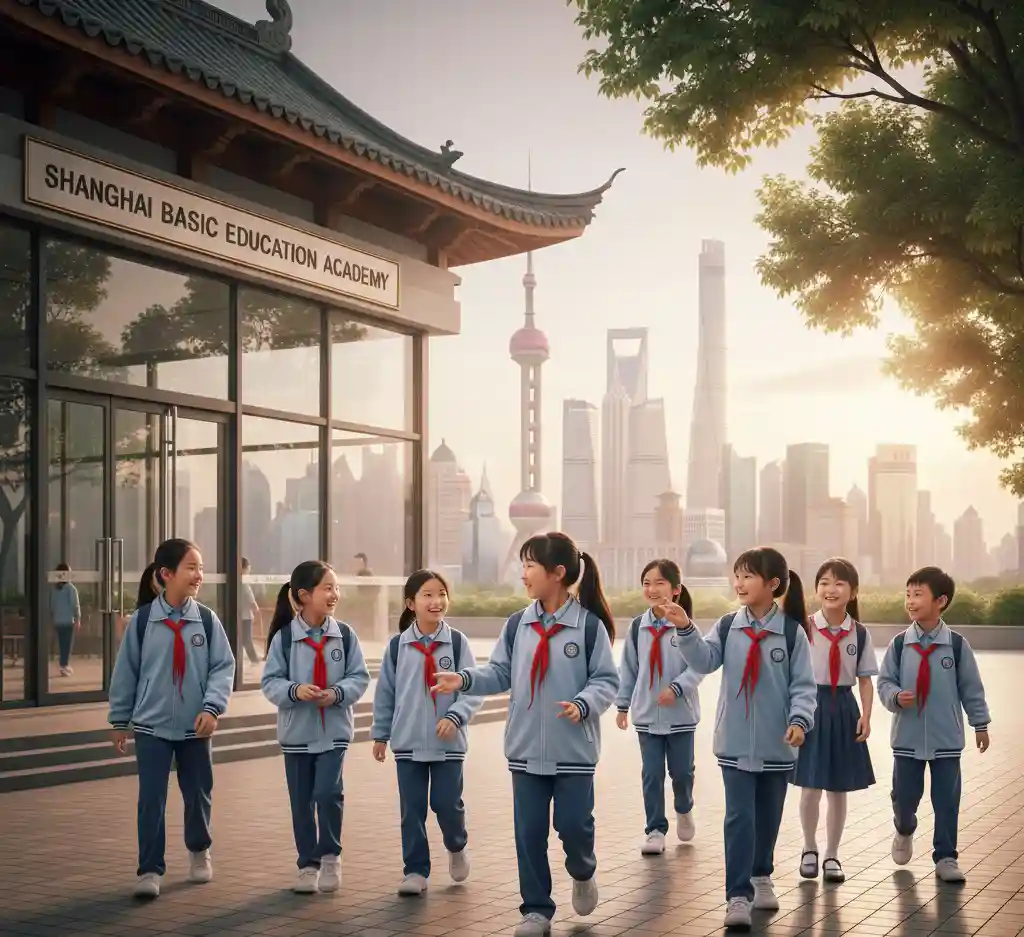

Shanghai has long stood as a beacon of academic excellence in China. This city not only builds schools but also fosters an environment where generations can develop their talents. A deep respect for knowledge and a commitment to modernization have elevated Shanghai’s primary education to global standards. This success is largely the result of the dedicated efforts of renowned institutions and highly distinguished educators.
In 1985, Shanghai took a historic step by enacting regulations to ensure nine years of compulsory education. It was the first city in China to make this system universal. Currently, the city follows a structured “5-4-3” format: five years for primary education, four years for junior secondary, and three years for senior high school.
Various levels of government manage these schools with great precision. They integrate education with regional economic planning, ensuring that school growth is aligned with social development. This decentralized “dual-tier government, dual-tier management” system allows districts to develop their own strategies, while the municipal government provides overall supervision and financial support.
Shanghai’s education system is not just limited to textbooks. The curriculum here focuses on “all-around development.” emphasis is placed on “holistic development,” balancing morality, intelligence, and physical health. While Chinese, math, and English are the core subjects, schools also place a strong emphasis on science, information technology, and environmental protection.
Teachers encourage students to think independently. They don’t just evaluate academic results but also document a student’s progress in social responsibility and life skills. Through more than 1,000 practice bases, students participate in real-world social activities, which teach them to survive and interact in society.
The government actively encourages private schools to complement the public system. By 2005, private institutions accounted for about 10% of Shanghai’s primary and secondary education. These schools often offer unique features and diverse services, especially at the pre-primary and senior high school levels. The city provides hundreds of millions of Renminbi (RMB) in special funds to support high-quality private education, proving that collaboration accelerates innovation.
A school is only as good as its teachers. Shanghai deeply understands this truth. The city has implemented a rigorous Teacher Qualification System (TQS), ensuring that only the most qualified individuals can enter the classroom. Additionally, the “Outstanding Principal and Teacher Project” is working to create world-class education experts.
The government sends teachers to renowned universities abroad for training. They also emphasize IT literacy, ensuring every teacher can adapt to the digital age. This commitment to lifelong learning by teachers directly translates into an enhanced experience for students.
One of Shanghai’s greatest successes is its journey toward equity. The municipal government has increased special funding for rural and underprivileged areas. By setting a minimum budget per student and supporting schools with financial deficits, Shanghai ensures that a child’s geographical location does not determine the quality of their education.
Shanghai’s primary and secondary education system is a beautiful blend of tradition, technology, and compassion. By prioritizing the student as an individual and investing heavily in teacher quality, the city has built a resilient and forward-thinking society. It is a system where the community, family, and school work together to shape the next generation of global citizens.