

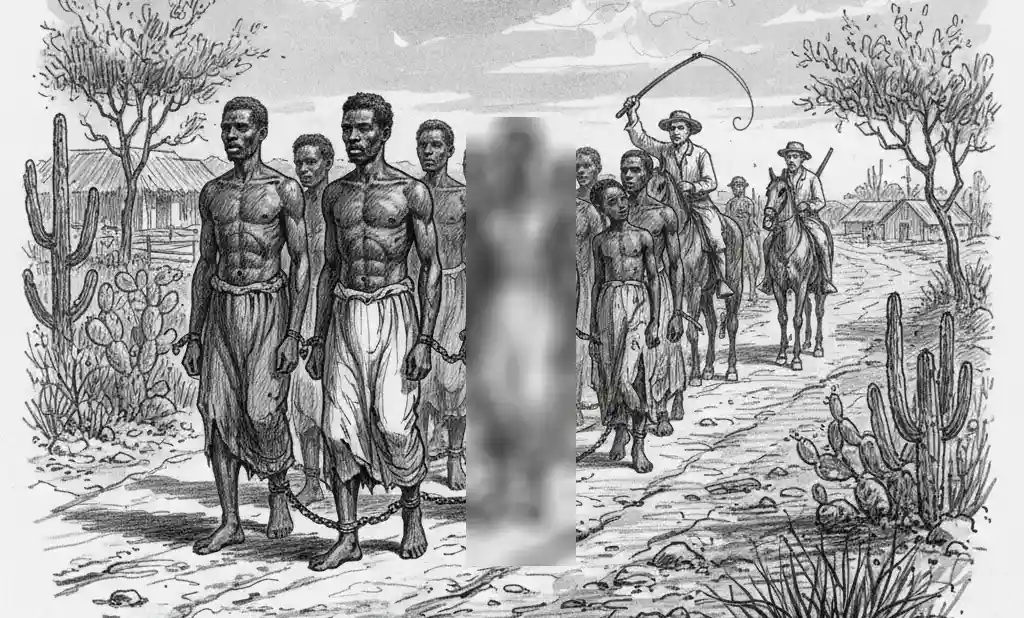

In the present era, there has been widespread debate and misunderstanding regarding Islamic Sharia and the treatment of female slaves in wartime. A group of people claims that in Islam, slaves can be treated arbitrarily or that forced sexual relations with them are permitted. (rape) is permissible. However, a deep analysis of hadith scholarship, the history of Islam’s social reforms, and modern psychological research shows that these claims are not only baseless but also contrary to the core spirit of Islam.
When Islam emerged, slavery was a global economic system. Rather than abruptly banning the practice, Islam laid the groundwork for its gradual abolition. Numerous verses in the Qur’an and hadiths declare freeing a slave to be the greatest act of worship.
The issue of female prisoners of war in Islam (who were called slaves) was essentially part of a state-sponsored system. In that era, if men were killed in war, women had no social security. Islam granted them the right to a dignified home.
In Islam, both ‘zina’ (adultery) and ‘rape’ are major sins, and their punishment is extremely severe. A fundamental principle of Islam is that “establishing a physical relationship against one’s will is forbidden.”
According to Islamic law, a specific legal process (observing the ‘iddah’ period and establishing ownership) was required to establish a relationship with a female prisoner of war. Any soldier could not just assault a captive at will. 2. Punishment for Rape: In Islamic jurisprudence (Fiqh), the punishment for rape is ‘Hadd,’ which is the death penalty. According to Imam Malik (r.) and Imam Shafi’i (r.), if someone forcibly violates a woman, they must receive the maximum punishment for adultery.
Many try to find the legality of rape in a hadith from the Battle of Autas. However, the historical context shows that these women were already married, but their marriages to their previous non-Muslim husbands were dissolved after they came under the Islamic state. Islam provided them with a new legal status and arranged for their rehabilitation in society, which was in no way ‘mass rape’ or ‘rampant sexual immorality.’
The Messenger of Allah (PBUH) clearly stated:
“Treat your subordinates (slaves/captives) well. Feed them from what you eat, and clothe them from what you wear.” (Sunan Abu Dawud)
In Islamic law, it was mandatory to ‘freedom’ female slaves as a kaffara (expiation) if they were beaten or physically abused.
Research in modern sociology and wartime psychology has shown that if rape is permitted within an army, the army’s discipline completely breaks down.
A study by Oxford University has found that wartime sexual violence destroys not only the victim but also the moral fabric of the attacking force. Islam strictly prohibited the mistreatment of women, children, and the elderly on the battlefield 1,400 years ago.
According to Islamic law, if a female slave conceived a child with her master, the child would be free, and the woman could no longer be sold (Umm al-Walad). She had to be given a life of honor for the rest of her life. This was the most progressive reform in the world at the time.
One of the five fundamental objectives (Maqasid al-Sharia) of Islamic Sharia is ‘Nasl,’ or the protection of lineage and honor. Rape shatters this fundamental human dignity and mental health.
Professor and researcher Dr. Jonathan Brown, in his study ‘Slavery and Islam,’ has shown that the strict codes of conduct for the treatment of female slaves in Islamic history are not found in any Western colonial history. According to Islamic law, using a captive to satisfy personal desire or lust was completely forbidden.
Conclusion
In conclusion, in Islam, zina (fornication) or rape is never permissible under any circumstances. Even on the battlefield, Islam has provided the highest provisions for protecting women’s honor. Those who quote hadiths out of context or based on misinformation to legitimize rape are either ignorant of Islam’s noble teachings or are intentionally engaged in propaganda.
According to Islamic history and Hadith, any physical contact without a woman’s consent is a crime and is subject to judgment in the court of Allah and in Sharia law.
References:
Sahih Bukhari and Muslim (Book: Jihad and Nikah)
‘Al-Muhalla’ by Imam Ibn Hazm
Jonathan A.C. Brown, “Slavery and Islam” (Oxford Publication)
Journal of Islamic Law and Society, “Status of Female Captives in Early Islam.”