

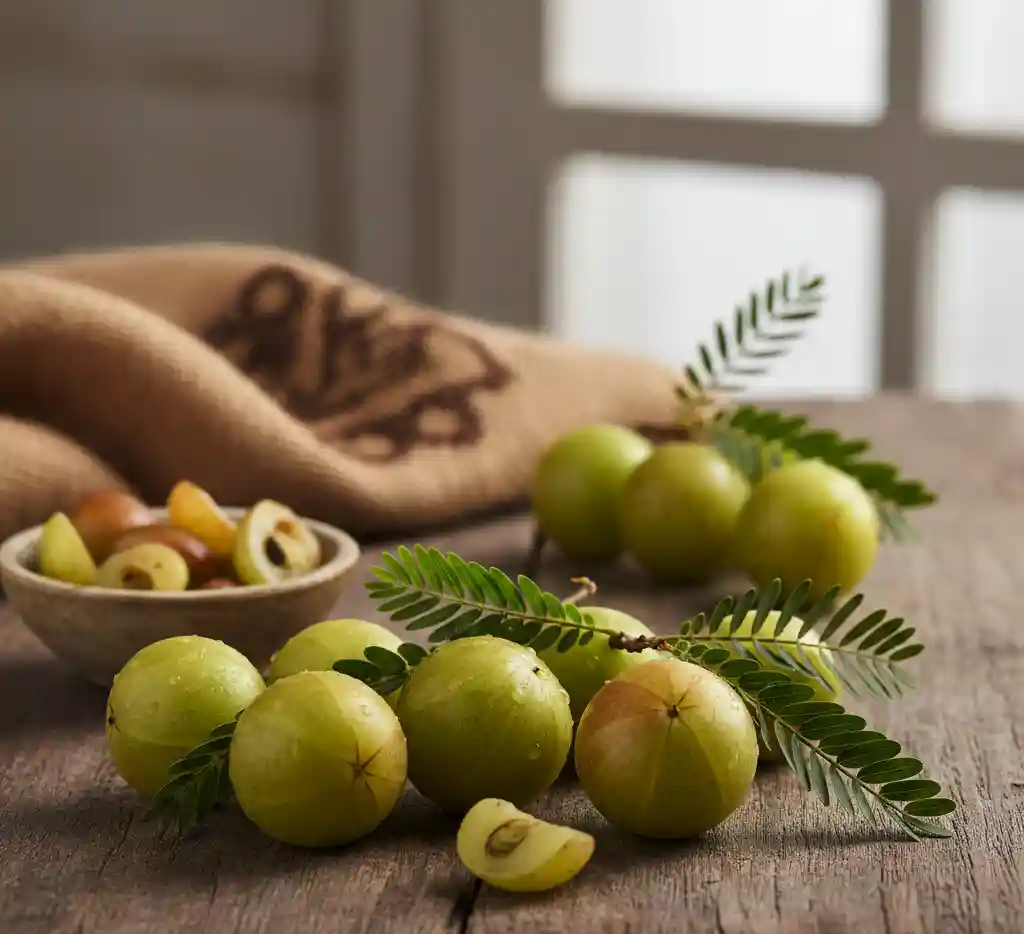
, from ancient Ayurvedic scriptures to modern-day superfood status. Learn about its health benefits and culinary uses.)
In the world of natural superfoods, few plants command as much respect as the Indian Gooseberry, popularly known as Amla (Phyllanthus emblica). This medium-sized tree, native to the tropical landscapes of South and Southeast Asia, has transitioned from a forest staple to a global wellness phenomenon.
A Powerhouse of Resilience Standing between 8 to 18 meters tall with a distinctive twisted trunk and feathery foliage, the Amla tree is a marvel of nature. It is remarkably hardy, capable of thriving in both humid and arid climates, and even possesses a natural resistance to fire.
The Golden Fruit of Nutrition The true treasure lies in its pale green, ribbed fruit. Despite its intense sourness and astringent notes, the Amla fruit is a nutritional giant. It is one of the richest natural sources of Vitamin C. Unlike other fruits, the tannins present in Amla help stabilize and preserve the Vitamin C content, even when processed.
From Ancient Wisdom to Modern Science For over two millennia, Amla has been a cornerstone of traditional medicine.
- Ayurvedic Legacy: Known as Amalaki in Sanskrit, it is praised in the Charaka Samhita as a ‘Rasayana’—a substance that promotes longevity and rejuvenation.
- Modern Research: Today, scientists are validating these ancient claims. Studies suggest that Amla possesses potent antioxidant and anti-inflammatory properties, offering potential benefits for heart health, cholesterol management, and immune support.
Culinary Versatility Beyond its medicinal value, Amla is a culinary delight in South Asian households. Whether it’s the tangy kick of a fresh chutney, the spicy crunch of a pickle, or the sweetness of a candied ‘Murabba,’ Amla adds a unique depth of flavor to any dish.
As the world leans closer to plant-based health solutions, the Indian Gooseberry stands tall, bridging the gap between ancient tradition and modern science.