

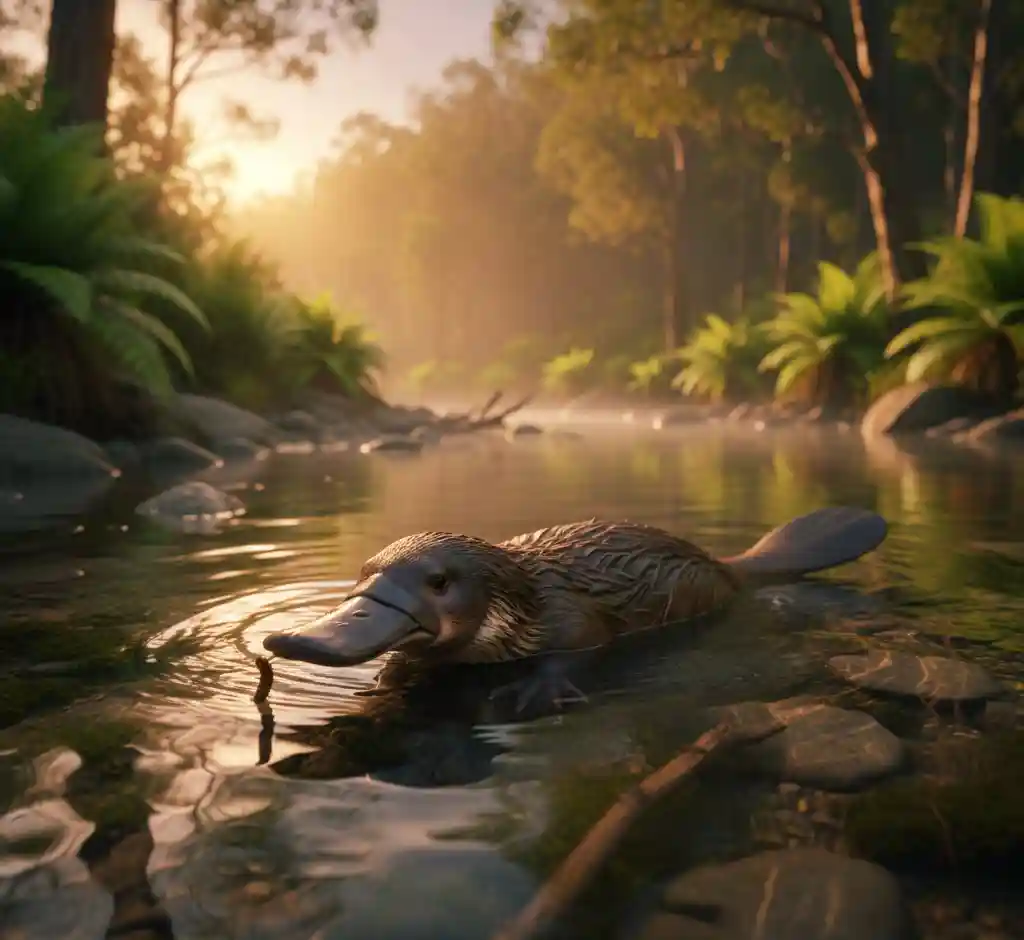

Deep within the freshwater systems of eastern Australia and Tasmania lives a creature so bizarre that early scientists once suspected it was a hoax. The platypus (Ornithorhynchus anatinus), with its duck-like bill, beaver-like tail, and otter-like feet, remains one of the most intriguing puzzles of the animal kingdom.
As a member of the ancient order Monotremata, the platypus defies standard mammalian “rules” by laying leathery eggs instead of giving birth to live young. Yet, it remains a mammal, nursing its hatchlings with milk secreted through specialized skin patches.
A Master of the Shadows Primarily crepuscular—most active during dawn and dusk—the platypus is a solitary hunter. While underwater, it effectively shuts down its eyes, ears, and nose. Instead, it navigates using a sophisticated electromechanical system. By detecting the faint electrical pulses generated by the muscles of its prey, such as larval insects and crustaceans, it can hunt with surgical precision in pitch-black waters.
Nature’s Hidden Weapon While they may look “comical,” males carry a secret defense: sharp, venomous spurs on their hind ankles. This venom is potent enough to kill small animals and cause excruciating pain in humans, a reminder that this shy creature is far from defenseless.
An Ancient Legacy Fossil records suggest that platypus-like ancestors roamed the earth 110 million years ago. While their closest living relatives are the echidnas, the platypus stands alone in its aquatic niche, a resilient survivor from a time when Australia was still connected to South America.