

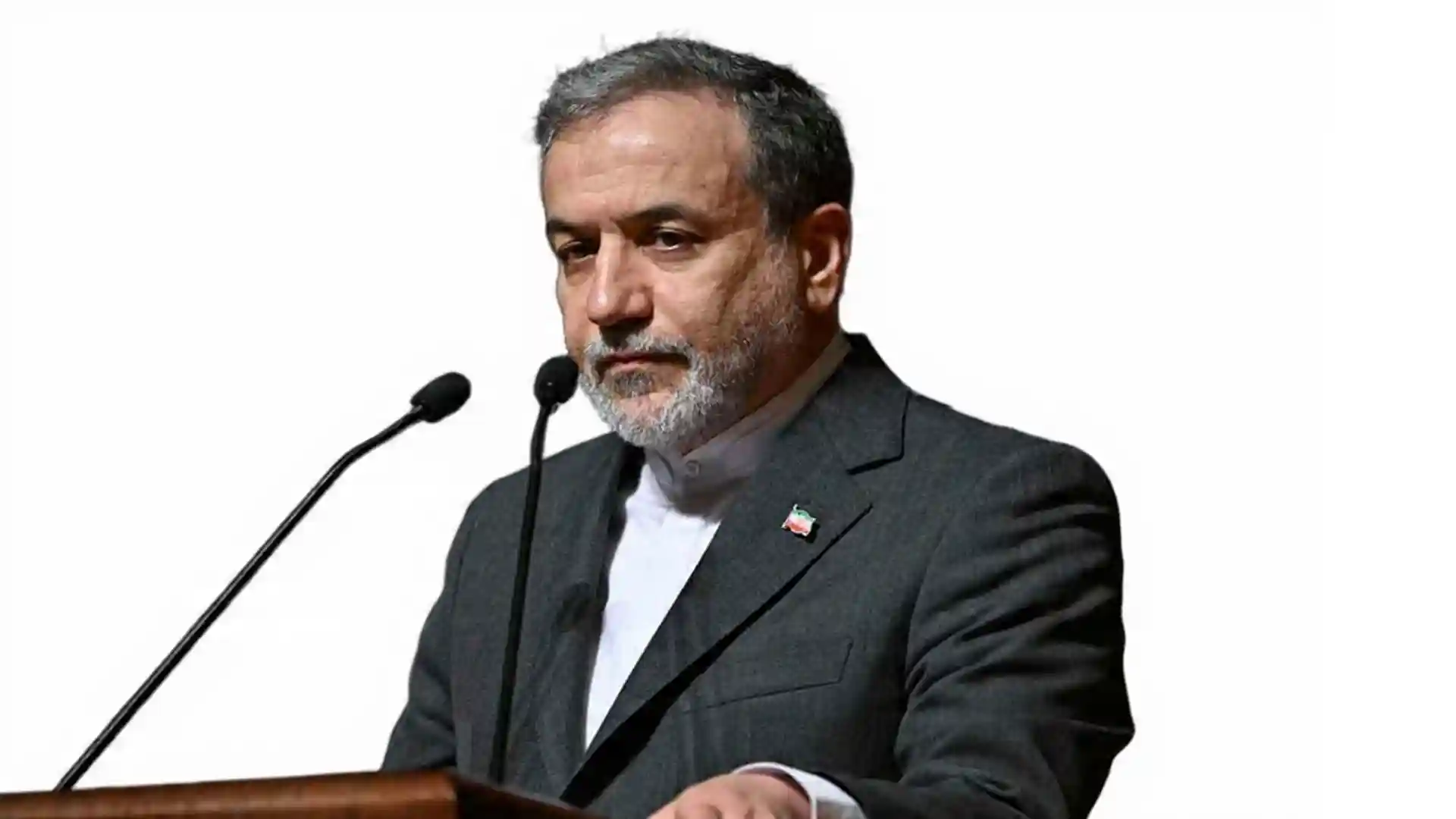

Amid rising tensions between the two countries, Tehran has indicated it is ready to engage in “fair and just” nuclear discussions with the United States. However, Iranian Foreign Minister Abbas Araghchi has sent a clear message that accepting any form of “pressure or dictation” is out of the question.
Speaking at a press conference during his visit to Istanbul on Friday, Araghchi stated, “Under no circumstances will we accept pressure or imposed conditions.” Standing alongside Turkish Foreign Minister Hakan Fidan, he added that Iran is nevertheless prepared to participate in any “meaningful, logical, and fair” diplomatic process.
It remains unclear when or in what format such potential talks might take place. Araghchi revealed that no meeting with the United States has been arranged yet. However, he cautioned, “Negotiations cannot take place under threat.”
The Foreign Minister further stated that there is no room for discussion regarding Iran’s “defense capabilities” and missile program. He said, “I believe no country is willing to compromise on its own security or national defense.”
Trump’s Threats and Signals for Dialogue
This announcement comes at a time when fresh threats are emerging from Washington. On Wednesday, US President Donald Trump called on Iran to sign what he termed a “fair” nuclear deal—or else Tehran could face another potential US military strike.
On Thursday, Trump revealed he has been in communication with Iranian leadership and plans further discussions. Trump said, “Many large and powerful warships are now heading toward Iran—hopefully we won’t have to use them.” While he did not specify whom he spoke with, he disclosed the message he conveyed. He said he made two things clear: first—no nuclear weapons; second—stop killing protesters.
Notably, reports have emerged that thousands of protesters have lost their lives during recent anti-government demonstrations in Iran amid severe crackdowns.
On Friday, Araghchi announced that Iran is “ready to re-enter nuclear negotiations”—while reiterating Tehran’s long-standing position that Iran’s nuclear program is for peaceful purposes. He added, “First, the necessary preliminaries must be established—concerning the format, venue, and agenda of the discussions.”
Military Exercise Announcements—From Both Sides
As tensions between the United States and Iran continue, both sides have announced plans for military exercises in the region.
The United States has announced that its forces will conduct a multi-day air exercise in the Middle East—aimed at sharpening the US Air Force’s ability to rapidly deploy personnel and aircraft.
Similarly, Iran has announced that its Islamic Revolutionary Guard Corps (IRGC)—recently designated as a terrorist organization by the European Union—will conduct live-fire exercises next week in the Strait of Hormuz. Hormuz is a critically important commercial waterway.
In response, US Central Command (CENTCOM) has cautioned Iran that the exercises should be conducted in a manner that is “safe, professional, and does not create unnecessary risks to freedom of navigation for international shipping.” CENTCOM’s statement said, “Unsafe and unprofessional behavior near US forces, regional partners, or commercial vessels increases the risks of collision, escalation, and destabilization.”
Turkey’s Mediation Offer to Reduce Tensions
During Araghchi’s visit to Istanbul, Turkey indicated it is ready to assume a “facilitating role” between Iran and the United States to help reduce tensions.
The Turkish Presidency reported that this offer was made during a telephone conversation between Turkish President Recep Tayyip Erdoğan and Iranian President Masoud Pezeshkian.
A statement released by the Turkish Presidency on Friday said, “Both leaders discussed Turkey-Iran bilateral relations and the escalating military tensions in the region.”
Araghchi told reporters, “The goals stated by the United States and others make it necessary for us to hold closer consultations, review regional developments, and coordinate our positions.”
Meanwhile, Moscow has reported that Russian President Vladimir Putin held a meeting with Ali Larijani, Secretary of Iran’s Supreme National Security Council. The Kremlin did not provide details about what was discussed in this previously unannounced meeting.
A day earlier, Putin publicly commented that Russia is watching the recent instability surrounding Iran “very closely.”
Amid all this, observers believe the crisis is becoming increasingly complex—with Iran signaling a willingness to return to talks under ‘fair and dignified’ conditions on one hand, and the United States increasing pressure, threats, and military presence on the other.