

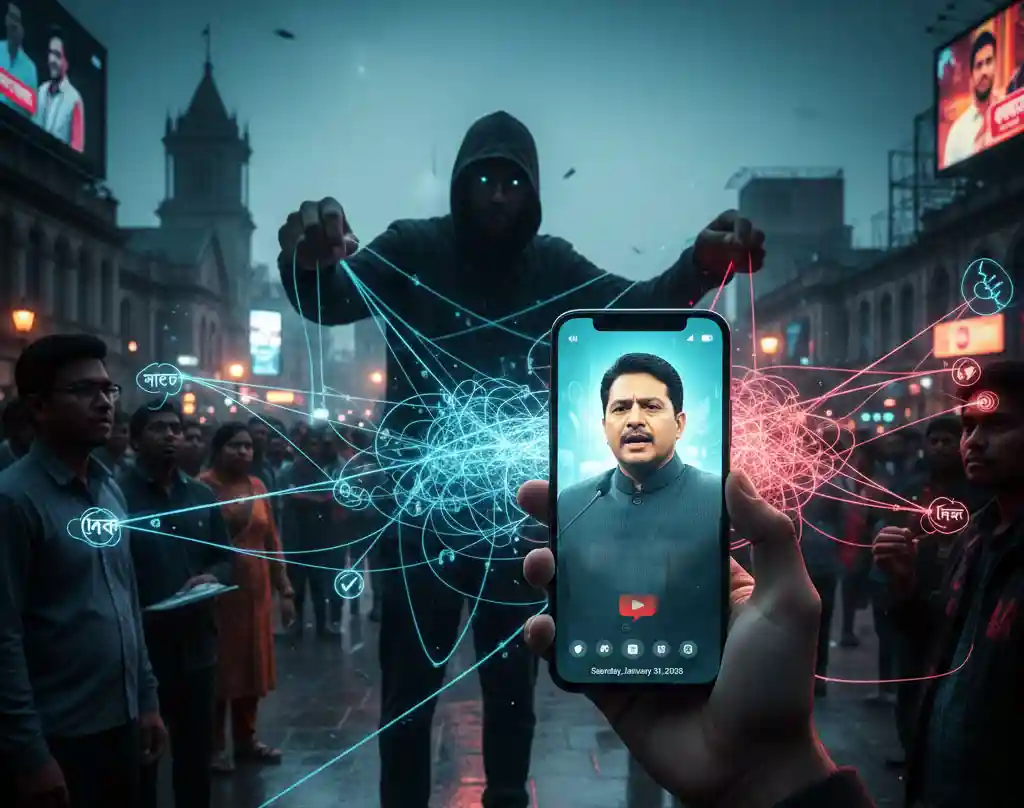

In a bygone era, the pulse of politics was felt in heated debates over coffee or through the thundering footsteps of street rallies. Today, the battlefield has shifted to the palm of our hands. Platforms like Facebook, X (formerly Twitter), and TikTok have become the new epicenters of political campaigning. This digital revolution, however, begs a critical question: Is this era of connectivity fostering a healthier democracy, or is it merely weaving a web of “fake news” and misinformation?
Information Flow vs. Infodemic
The hallmark of social media is its unprecedented speed. News now breaks on digital feeds long before it hits traditional broadcast outlets. This shift has democratized communication, allowing everyday citizens to engage directly with leaders—a level of accessibility once deemed impossible. Yet, this velocity is a double-edged sword. Alongside rapid updates, we are witnessing a surge in “deepfakes” and manipulated imagery.
Political analysts warn that disinformation is frequently weaponized to dismantle opponents. Without the tools or time to fact-check, unsuspecting users can fall prey to viral falsehoods that have the potential to incite real-world unrest or political instability.
The Algorithm Trap: Echo Chambers and Polarization
Social media platforms operate on algorithms designed to cater to user preferences. If you lean toward a specific ideology, your feed becomes a curated stream of partisan praise and opposition critiques. This creates an “echo chamber,” where existing biases are reinforced and dissenting voices are filtered out. The result is a deeply polarized society where tolerance for opposing views is dwindling, and the truth is often sacrificed at the altar of personal belief.
Fact vs. Fake: The Great Divide
The role of social media in modern politics can be summarized through two contrasting lenses:
- The Fact: It is an unrivaled tool for amplifying the voices of the marginalized, exposing corruption in real-time, and mobilizing grassroots movements for social awareness.
- The Fake: It provides a playground for “troll armies” and bots to manufacture artificial consensus, engage in character assassination, and stoke communal tensions.
The Path Forward
Technology experts argue that legislation alone cannot curb the tide of misinformation. The true solution lies in “digital literacy.” Before hitting the share button, users must verify sources and cross-reference sensational claims with reputable news organizations.
Ultimately, social media in politics is a double-edged sword. It has the power to fortify democracy or dismantle it like a house of cards. Whether it serves as a beacon of truth or a tool for deception depends entirely on the mindfulness of our clicks and the critical nature of our thinking.