

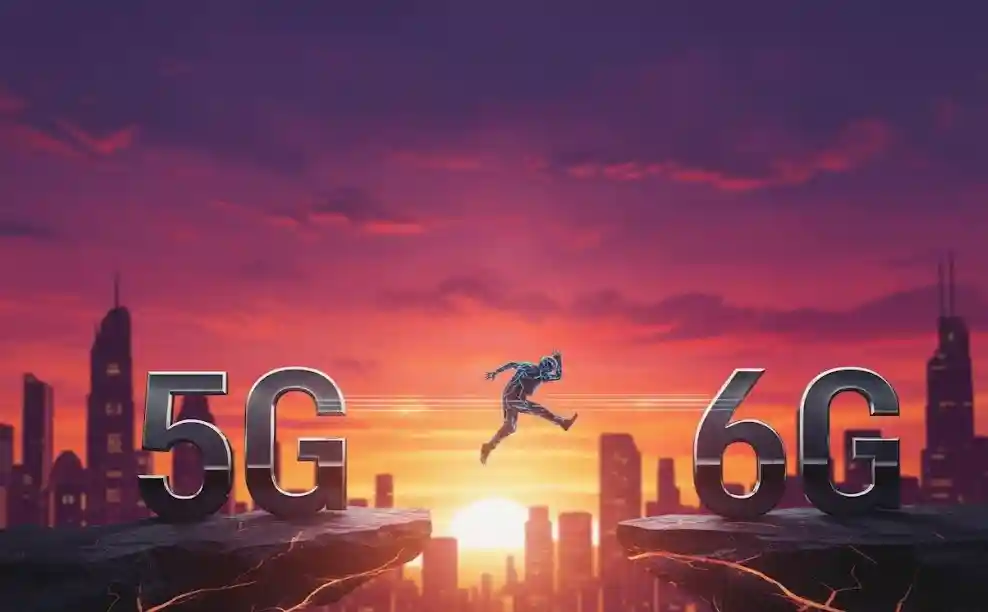

While many regions are still navigating the complexities of 5G infrastructure, the tech world has already shifted its gaze toward the horizon: 6G. This sixth generation of wireless technology isn’t just a minor upgrade; it’s poised to completely redefine how we interact with the digital world. Scientists suggest that 6G could deliver speeds up to 100 times faster than current 5G networks.
Breaking the Speed Barrier
Experts predict that 6G could reach a staggering peak data rate of 1 Terabit per second (1 Tbps). To put that into perspective, you could download multiple high-definition movies in less than a single second.
While 5G typically hovers between 1 to 10 Gbps, 6G moves into a different league entirely. This isn’t just about faster browsing; it’s the backbone needed for advanced Artificial Intelligence, seamless holographic communication, and the widespread adoption of fully autonomous vehicles.
When Will It Be Within Our Reach?
Global connectivity standards usually evolve in ten-year cycles. Here is the estimated roadmap for 6G:
Research & Development: Tech giants in South Korea, China, Japan, and the USA are already pouring billions into 6G blueprints.
Initial Testing: Experimental phases and pilot projects are expected to kick off around 2028.
Commercial Launch: For the general public, 6G will likely become commercially available by 2030.
Why the Leap to 6G?
You might wonder, “If 5G is already fast, why do we need more?” The answer lies in the future of smart cities and high-precision robotics. 5G still has minor limitations when it comes to “latency” (the delay in data transfer).
6G aims for near-zero latency, which is critical for life-altering technologies like telesurgery (remote surgery) and ultra-responsive real-time gaming. It bridges the gap between the physical and digital worlds in ways 5G simply cannot.
The Road Ahead
For countries still stabilizing their 5G networks, the 6G buzz serves as a wake-up call for infrastructure readiness. While the world dreams of 6G, the immediate challenge is to build a robust foundation today to ensure we aren’t left behind in the hyper-connected era of tomorrow.