


The history of human civilization is inextricably linked with the evolution of currency. From the primitive days of the barter system to the modern era of digital transactions, the medium of exchange has undergone a radical transformation. In Bengal, this evolutionary journey is as thrilling as it is diverse.
The Early Era: When Cowrie Shells Reigned Supreme
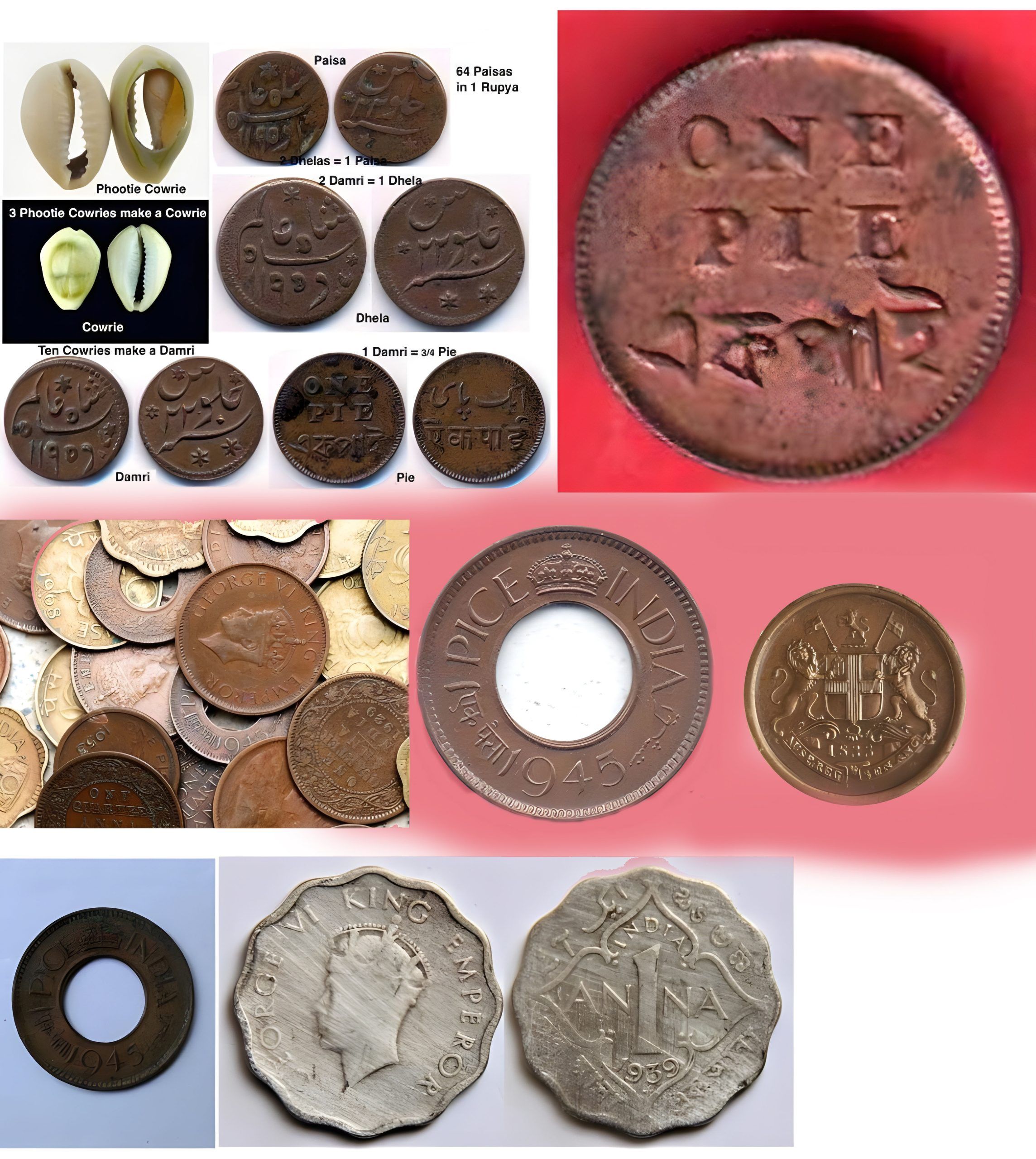
In ancient and medieval Bengal, the primary medium of exchange was the cowrie (Kori). These small seashells served as the foundation of trade for common people. Even today, the linguistic legacy of these shells lives on in the Bengali language through terms like Taka-kori (money) or Korkore note (crisp banknotes). The system even accounted for fractional values using broken shells, known as Phuti Kori.
Tiny Units: Dhamri, Dhela, and the Pie
As metal coins began to supersede cowries, several smaller denominations emerged:
- Dhamri: An ancient unit even smaller than a ‘Pie.’
- Dhela: In various ancient settlements, special clay discs or pieces of inexpensive metal were used as makeshift currency.
- Pie and Paisa: These became widely circulated during the British era. According to the colonial-era calculation, 3 Pies equaled 1 Paisa, and 4 Paisas made 1 Anna.
The Reign of the ‘Anna’ and the Rise of the Taka
There was a time when the entire market functioned on the Anna system.
- One Anna and Four Annas: The 4-Anna coin, popularly known as the Siki, was a staple for the middle class.
- Eight Annas (Adhuli): The Adhuli remained a common sight in rural Bengal well into the 1990s.
- The Taka: It took 16 Annas to make one Taka. In those days, owning a one-Taka coin was considered a symbol of prestige and status.
The Lost Names of Monetary History
Beyond the common denominations, Bengal’s history features several other notable currencies:
- Mohur: A high-value gold coin used primarily by rulers during the Mughal Empire.
- Damri: Immortalized in the proverb “The skin may peel, but the Damri stays” (referring to extreme stinginess), the Damri was a coin of very low denomination.
- Half-Paisa and Holed Coins: During the British period, coins with a distinct hole in the center (Phuto Paisa) were quite prevalent.
The Modern Transformation
Following independence in 1971, Bangladesh introduced its own national currency, the Taka. However, the evolution did not stop at paper notes. Today, we are rapidly transitioning toward “plastic money” (debit and credit cards) and the seamless world of mobile banking and QR code payments.
Conclusion
The long journey from cowrie shells to coins, and from coins to digital wallets, is a reflection of our growing economic strength and modernization. Every ancient coin unearthed from the soil of this land stands as a testament to the rich commercial heritage and enduring legacy of Bengal.