

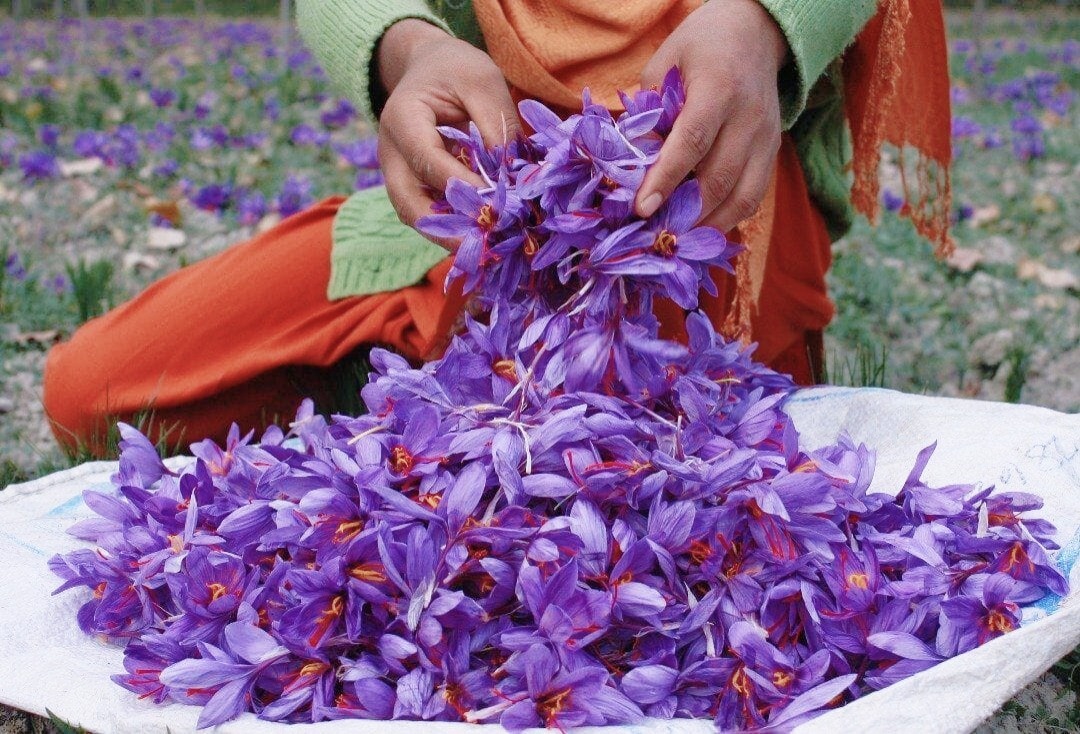

Which spice is the priciest in the world? Most people know the answer: Saffron. However, this exotic spice is more than just a culinary luxury; it carries a legacy spanning thousands of years, intertwined with wars, religious rituals, and royal traditions.
Origins and Global Journey
Historians suggest that saffron cultivation began in the valleys of Kashmir, eventually spreading to China and neighboring regions following Mongol invasions. Its medicinal properties were notably documented in the famous Chinese Materia Medica, Bencao Gangmu (1552–1578). In antiquity, however, Cilicia in Asia Minor was recognized as the primary hub for saffron production.
The Rise and Fall in Europe
Saffron was introduced to Spain by the Arabs around 961 AD. Interestingly, while it appeared in the 10th-century English healing manual known as the Leechbook, the spice almost vanished from Western Europe during the Middle Ages. It wasn’t until the return of the Crusaders that saffron regained its popularity across the continent.
A Symbol of Divinity and Royalty
Beyond the kitchen, saffron has long been a symbol of status. In ancient India, the golden dye extracted from saffron stigmas was used to color royal fabrics. Following the passing of Gautama Buddha, his followers adopted saffron as the official color for priestly robes. To this day, the hue remains a symbol of purity and holiness in many cultures.
Luxury and Ancient Fragrances
The significance of saffron is even etched in religious texts; the Song of Solomon (4:14) mentions it as a precious aromatic herb. In Greek and Roman civilizations, its use reached extravagant heights. Saffron was sprinkled in grand halls, theaters, and baths as a perfume. Legend has it that when the Roman Emperor Nero entered the city, saffron was strewn along the streets as a mark of supreme honor.
Why is it the World’s Most Expensive Spice?
Since ancient times, saffron has often been valued higher than gold. To produce just one kilogram of saffron, it takes approximately 150,000 to 200,000 flowers. Each flower must be harvested by hand to collect only three delicate red stigmas. This labor-intensive process is what maintains its status as the world’s costliest spice.
Remarkable Health Benefits
Modern science supports what ancient healers always knew. Rich in antioxidants, saffron offers several key health benefits:
- Mental Wellness: Often called the “Sunshine Spice,” studies show it is highly effective in improving mood and treating mild depression.
- Cognitive Support: It protects brain cells, aiding in the prevention of memory-related conditions like Alzheimer’s.
- Skin Radiance: Used for centuries in beauty rituals, it helps reduce dark spots and provides a natural glow.
- Vision Protection: Saffron plays a vital role in slowing down age-related vision loss.
- Heart Health: Its potassium content helps regulate blood pressure and reduces the risk of cardiovascular diseases.
How to Identify Genuine Saffron
With its high price comes the risk of counterfeits. Here’s how to identify the genuine one:
- The Water Test: When placed in warm water, real saffron will slowly turn the water golden-yellow, but the threads themselves will remain red.
- The Aroma: Authentic saffron has a distinct, complex scent—a blend of honey and hay.
Caution: Saffron is incredibly potent. Experts recommend consuming no more than a pinch per day. Pregnant women should always consult a physician before adding it to their diet.