

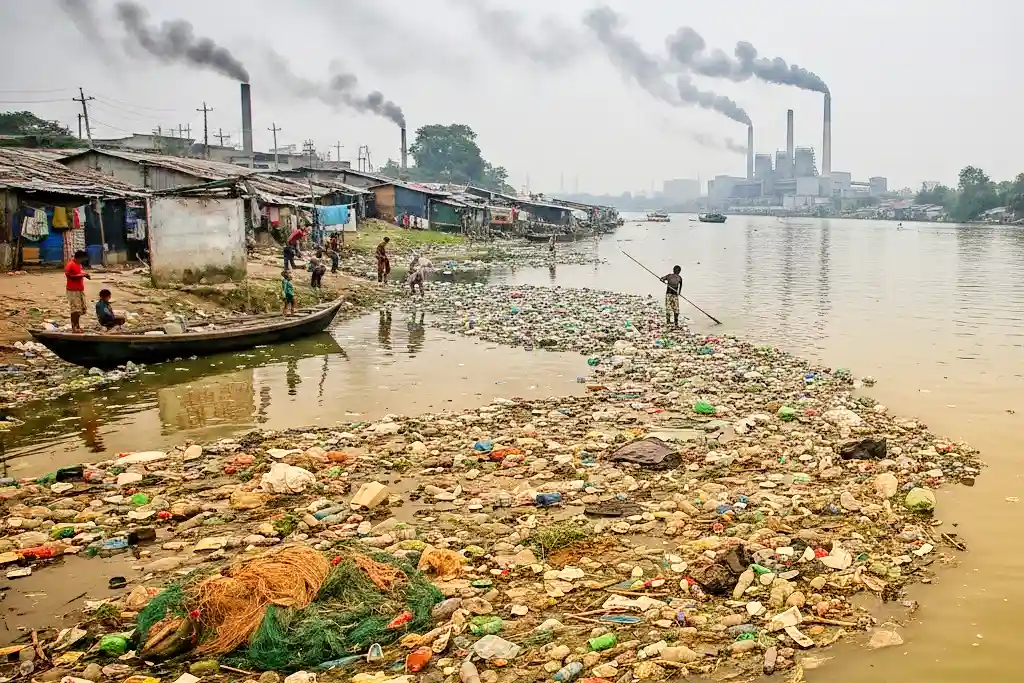

The rivers that flow through the veins and branches of Bangladesh’s map are in existential crisis today. The once-vibrant rivers are now dying due to industrial waste, plastic pollution and encroachment. According to environmentalists, almost most of the country’s rivers are now victims of severe pollution, which has become an extreme threat not only to aquatic biodiversity, but also to public health and the national economy.
A field observation of the rivers around Dhaka—the Buriganga, Turag, Balu and Shitalakshya—shows that their water is now as black and foul-smelling as tar. Untreated waste from dyeing factories, tanneries and chemical factories on the riverbanks mixes directly with the water. Single-use plastic and polythene have formed several layers on the riverbed, which is obstructing the normal flow of water. Waste from the drainage lines of Dhaka and big cities is flowing into the river without any filtering.
River pollution is severely disrupting the country’s ecological balance. Extinction of aquatic life: The level of dissolved oxygen in the water has dropped to dangerous levels. In many places in Buriganga, the oxygen level is almost zero, making it impossible for fish or any other aquatic animal to survive. Due to irrigation using the toxic water of the river, heavy metals (such as cadmium, lead) are entering the human diet through rice and vegetables. As the surface water of the river is polluted, the pressure on groundwater is increasing, resulting in the water level dropping rapidly.
According to environmental scientists, if the river cannot be protected, Bangladesh may face a terrible desertification process in the next few decades.
River expert Professor Dr. Shamsul Alam said, “The river is not just water, it is a living entity. If we cannot ensure industrial ETP (Effluent Treatment Plant) now and do not take strict action against the encroachers, then our future generations will get a toxic delta.”
The government and the concerned authorities must take several urgent steps to deal with this crisis. Adopt a zero tolerance policy against river encroachment and polluters. Waste management: Make the use of ETP mandatory in every factory and build a central waste treatment plant. Public awareness: Motivate the common people to protect the river and stop the use of polythene. If the river survives, the country will survive. Preventing river pollution is now the biggest demand of the time in the fight to protect the nature and existence of Bangladesh.