

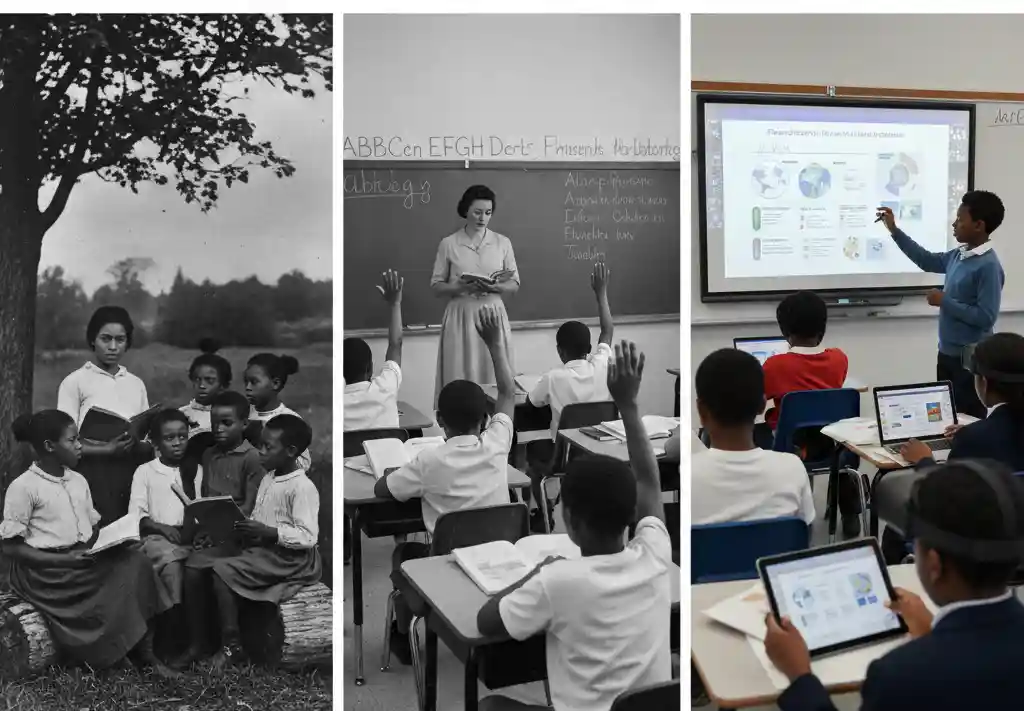

Literacy has always been more than just reading and writing; it is a tool for self-determination and understanding the world. For African Americans, the journey to literacy has been a battle against historical suppression, systemic barriers, and linguistic stigma.
The Roots of Resilience During the era of slavery, literacy was often illegal for Black people. Despite this, enslaved Africans found innovative ways to learn, maintaining literacy in languages ranging from Arabic to Spanish. Following Emancipation, the focus shifted toward formal schooling, yet the challenge of “negative language attitudes” remained.
The Rise of AAE and SESD Approaches Isolation and cultural history led to the development of African American English (AAE). For decades, this dialect was unfairly labeled as “deficient.” In response, educators introduced Standard English as a Second Dialect (SESD) programs in cities like Chicago and Los Angeles. These programs respected the students’ home language while teaching Standard English through:
- Culturally relevant folk tales.
- Contrastive grammar exercises.
- Integrating community-based materials.
Modern Strategies: Hip-Hop and Multiculturalism Today, the movement has shifted toward “Critical Pedagogy” and multicultural education. By using hip-hop lyrics as literary texts, teachers are bridging the gap between youth culture and academic standards. Scholars argue that using AAE-informed curricula doesn’t hinder learning; rather, it empowers students by validating their identity.
As educators continue to innovate, the goal remains clear: erasing the educational achievement gap by embracing the rich linguistic heritage of the African American community.