

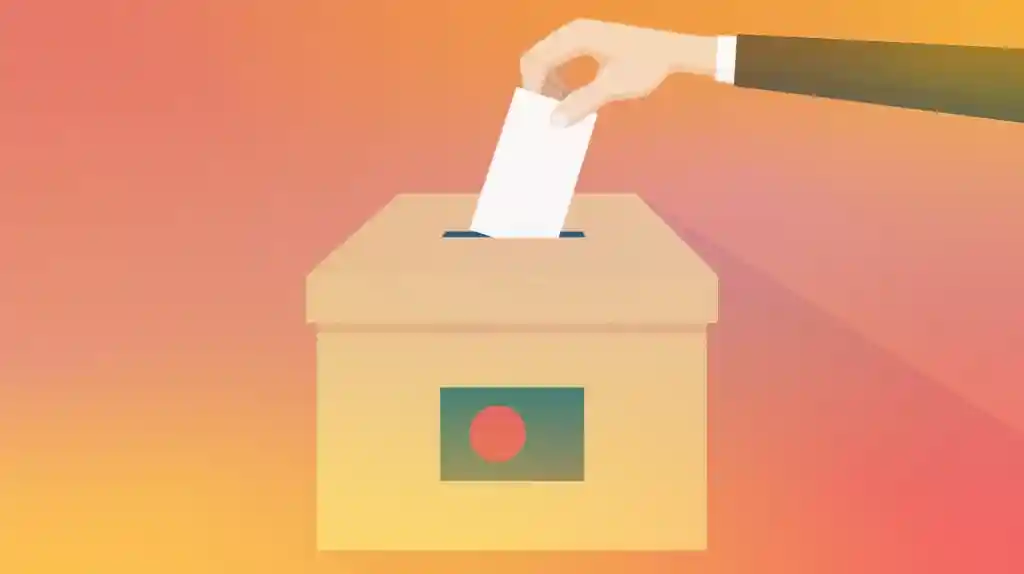

The much-awaited 13th parliamentary election in Bangladesh is set to be held on February 12. This is the country’s first general election since the student uprising in August 2024. However, just four days before the voting, the fear of political unrest and conflict has intensified across the country, including the capital.
Last Friday (February 6), a massive agitation was created centered on the procession of thousands of protesters towards the residence of the capital’s chief advisor, ‘Jamuna’. Police and BGB used water cannons, tear gas and sound grenades to disperse the protesters. Several protesters were injured during this time. The unrest is mainly centered on the implementation of the ninth pay scale of government employees and some political demands.
In the absence of the Awami League, the main fight in this election is between the Bangladesh Nationalist Party (BNP) and Jamaat-e-Islami.
BNP Chairman Tarique Rahman is leading the campaign after returning home after two decades in exile. He is optimistic about forming a government on his own and has rejected the proposal to form a ‘national unity government’ with Jamaat.
The ‘National Citizen Party’, formed by leaders of the anti-discrimination student movement, is attracting a large section of young voters. Along with the parliamentary elections, a nationwide referendum on the ‘July National Charter’ will be held on the same day. The charter proposes limiting the prime minister’s term to two terms (10 years) and a bicameral parliament. Voters will be given two ballots at the same time – a white ballot for electing members of parliament and a pink ballot for the referendum.
After the 13th National Parliament elections and referendum, questions of ambiguity and legal complexity are emerging regarding the nature, timing and procedural aspects of the work of the Parliament and the Constitutional Reform Council. Various discussions are also taking place on social media about the process of transferring power to the government after the elections. Even the press wing of the chief advisor has already given a message in this regard.
The army and other law enforcement forces have been deployed across the country since February 8 to control the electoral environment. The Election Commission said that 1,050 executive magistrates are working in the field. According to TIB data, 15 people have already been killed in post-schedule violence.
According to political analysts, this election is not just a fight for a change of government, but a major test of state reforms. However, the electoral violence and lack of coordination between major parties have created some concern among the general voters.