

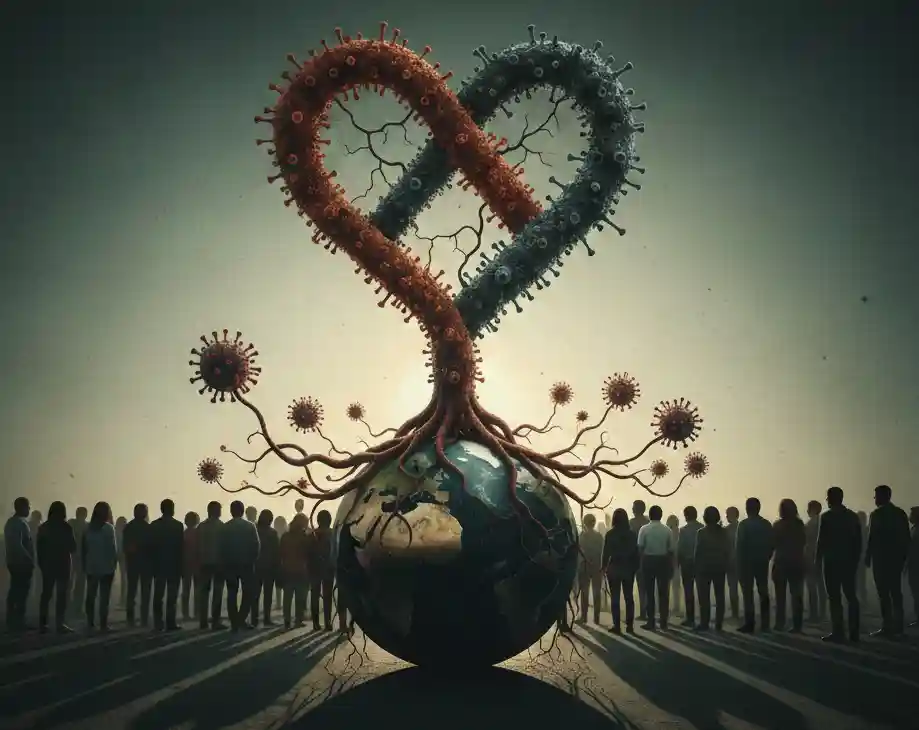

In the vast landscape of biological entities, few are as enigmatic and influential as the virus. Often described as existing on the very edge of life, these microscopic infectious agents are responsible for a wide spectrum of human experiences, from the minor inconvenience of a common cold to global health crises.
The Anatomy of an Invisible Invader
At its core, a virus is a masterpiece of biological minimalism. Unlike bacteria, which are complex, single-celled organisms, a virus consists simply of genetic material—either DNA or RNA—encased within a protective protein shell known as a capsid. These capsids are typically categorized into three structural forms: the 20-sided icosahedral, the rod-like helical, and the more irregular complex structures, such as those seen in the smallpox virus.
Viruses are remarkably small, ranging from 30 to 450 nanometers. To put this in perspective, they are roughly 20 to 100 times smaller than most bacteria, making them invisible under a standard light microscope.
The Hijackers of Life: How Viruses Replicate
A virus is not strictly “alive” in the traditional sense because it cannot reproduce on its own. Rather, it functions as an intracellular parasite. The process begins with absorption, where the virus attaches to a specific host cell. Once it penetrates the cell membrane, it “uncoats” its genetic material and effectively hijacks the cell’s internal machinery.
The host cell is forced to stop its normal functions and begin churning out viral proteins and genomes. In some cases, like with retroviruses (such as HIV), the virus uses an enzyme called reverse transcriptase to integrate its own instructions directly into the host’s DNA. Once new viruses—called virions—are assembled, they burst forth from the cell (often killing it) to infect new targets.

From Animals to Humans: The Threat of Zoonotic Diseases
While many viruses are host-specific, others possess the ability to jump from animals to humans. These are known as zoonotic viruses. Notable examples include the West Nile virus, transmitted via mosquitoes, and the Hantavirus, which spreads from rodents. Furthermore, unconventional agents like prions (infectious proteins) and viroids (naked RNA) continue to challenge our understanding of infectious disease, leading to conditions like Creutzfeldt-Jakob disease.
The Battle for Health: Treatment and Prevention
Treating viral infections remains one of modern medicine’s greatest challenges. Because viruses live inside human cells, developing drugs that kill the virus without harming the host is incredibly difficult. This is why antibiotics, which target bacteria, are useless against viral infections.
While antiviral drugs like acyclovir (for herpes) and AZT (for HIV) have made significant strides, prevention remains our most powerful weapon.
- Vaccines: By exposing the immune system to non-infectious viral antigens, vaccines “train” the body to recognize and fight the real virus.
- Hygiene and Barriers: Simple measures like handwashing, wearing masks, and using protective equipment in medical settings are vital in breaking the chain of transmission.
Looking Ahead
As viruses continue to mutate and evolve—often rendering old vaccines less effective—the scientific community remains in a constant race to adapt. From using viruses as vectors in gene therapy to developing seasonal flu shots, our relationship with these tiny agents is a complex blend of combat and collaboration. It takes more than simply curiosity to comprehend them. It is a fundamental necessity for the survival of global public health.