

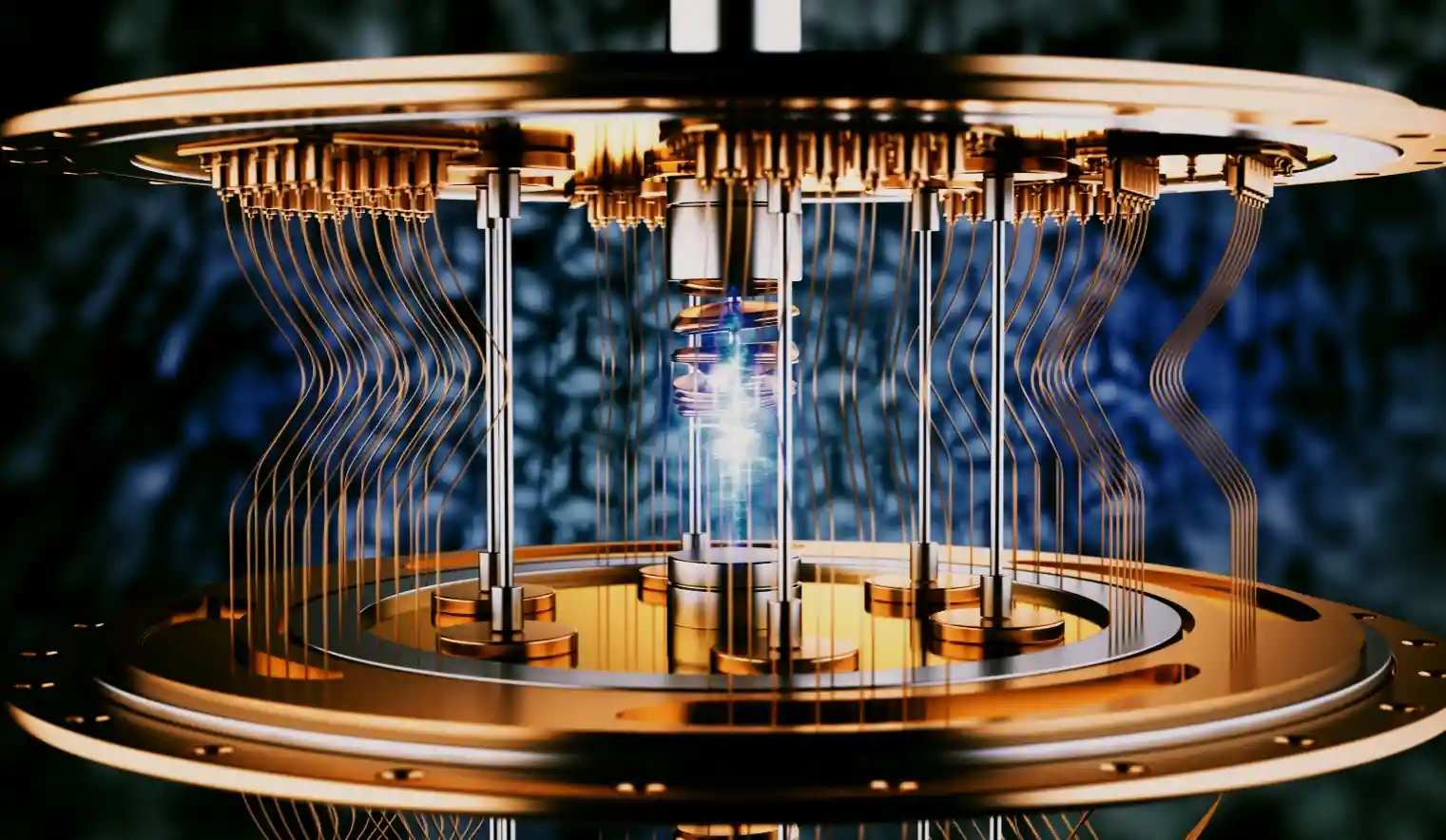

In our current digital era, everything—from the smartphones in our pockets to massive supercomputers—operates on binary code: the simple logic of 0s and 1s. However, a seismic shift is coming that promises to redefine our technological landscape: Quantum Computing.
One might wonder: if today’s supercomputers can already perform trillions of calculations per second, what makes quantum computers so special that they are considered the ultimate superpower of the future?
Beyond Speed: The Magic of Qubits
Traditional computers process information using bits, which must be either a 0 or a 1 at any given moment. Quantum computers, however, utilize Qubits. Thanks to a principle of quantum mechanics known as superposition, a qubit can exist as both 0 and 1 simultaneously.
To put it simply: imagine a traditional computer trying to solve a maze. It would test every path one by one until it finds the exit. A quantum computer, by contrast, can explore every path at the same time, pinpointing the correct solution almost instantaneously.
Outperforming Today’s Supercomputers
Tasks that would take today’s most powerful supercomputers thousands of years to complete can be handled by a quantum computer in mere minutes. Here’s why it will outmatch current technology:
Massive Data Handling: In the realm of Big Data, quantum computers can identify patterns and correlations that are simply invisible to classical algorithms.
Precise Molecular Simulation: Developing new life-saving drugs or understanding complex chemical reactions requires simulating atoms and molecules. While classical computers struggle with this complexity, quantum computers can mirror molecular behavior with perfect accuracy.
The Future of Cybersecurity: Quantum computing has the potential to crack most of our current encryption methods. Consequently, it will be the cornerstone of developing next-generation, unhackable security systems.
Real-World Impact
The quantum revolution won’t be confined to physics labs; it will transform our daily lives:
Medicine: It will accelerate the discovery of cures for chronic diseases and enable personalized medicine tailored to an individual’s unique genetic code.
Climate Change: From optimizing carbon capture technologies to providing hyper-accurate weather forecasting, quantum computing will be a vital tool in tackling the climate crisis.
Artificial Intelligence (AI): The AI we see today is just the beginning. Powered by quantum computing, AI will become exponentially faster, smarter, and more intuitive.
The Road Ahead: Challenges and Limitations
Despite the hype, building a stable quantum computer is an immense engineering challenge. These machines require environments colder than deep space and must be shielded from even the slightest vibration. Industry giants like Google, IBM, and Microsoft are currently racing to overcome these hurdles.
Experts suggest we are currently at the same stage of the “Quantum Age” as we were with electronic computers in the 1940s. Once this technology matures, it will solve mysteries that are currently beyond our wildest imagination.
Conclusion
Quantum computing is not just a race for more speed; it is a fundamental shift in how we process information. When it finally goes mainstream, today’s supercomputers will seem as simple as basic pocket calculators. In the face of future global challenges, quantum computing is set to become humanity’s most powerful tool.