

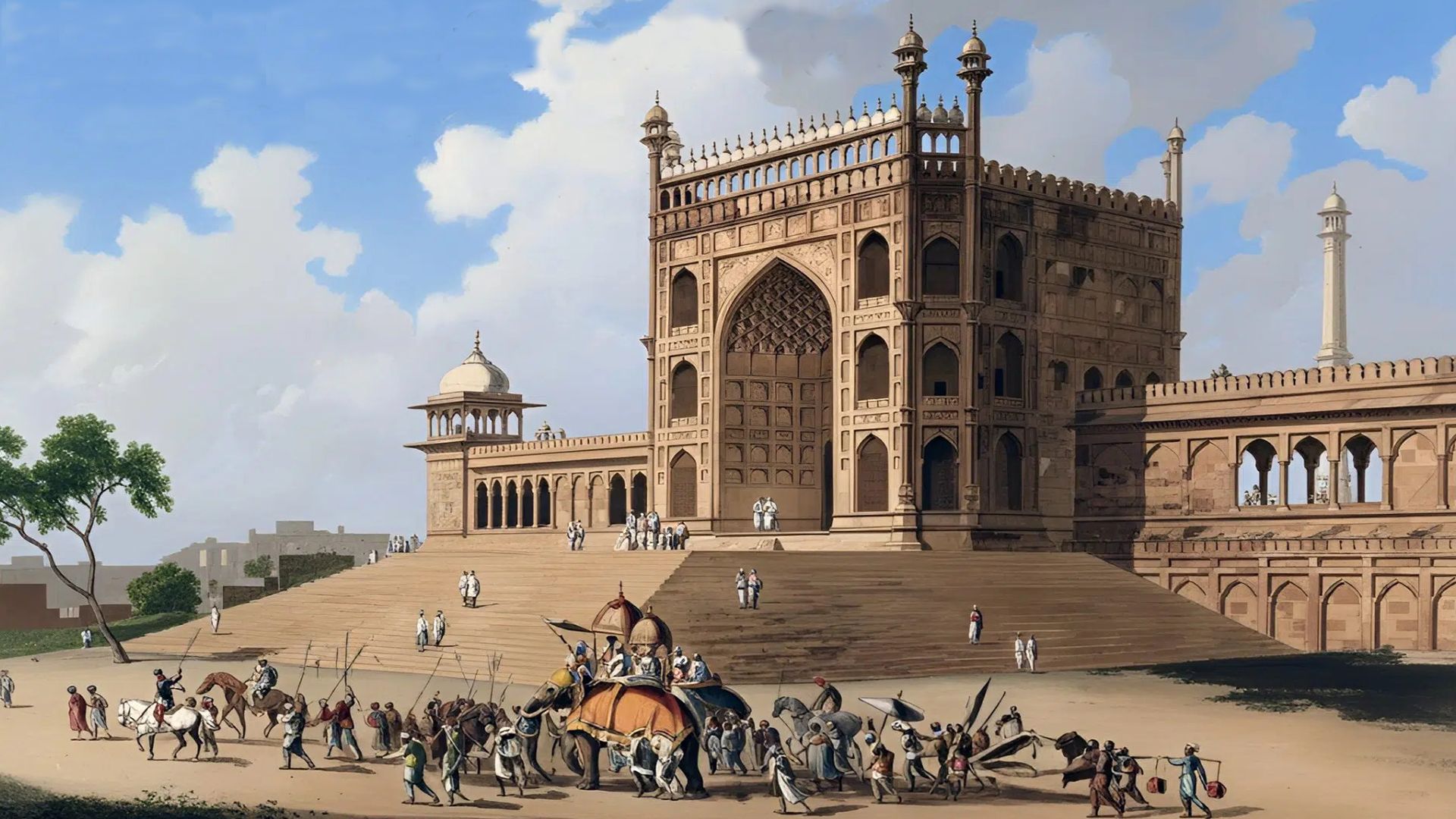

Capturing the essence of a colossal historical figure within a brief discussion is an arduous task. Yet, to bridge the gap between the modern generation and the rich intellectual heritage of the past, it is essential to revisit the life of the legendary Shah Waliullah Dehlawi (RA). As the pioneer of Muslim renaissance in the Indian subcontinent, his significance transcends time. While painting a complete portrait of such a multifaceted personality is daring, this overview aims to provide readers with a glimpse into his revolutionary life and thoughts.
Early Life and Scholarly Foundations :
Shah Waliullah was born on February 21, 1703, in Delhi, India. From a tender age, he exhibited a profound passion for various branches of knowledge. His initial education and spiritual training began under the tutelage of his father, Shah Abdul Rahim, at the Madrasa Rahimiyya.
He mastered Arabic and Persian grammar, literature, higher philosophy, theology, metaphysics, mysticism, and jurisprudence. Following his father’s death in 1718, he assumed the leadership of the Madrasa at a young age and dedicated the next twelve years to teaching.
The Journey to Hejaz: A Turning Point :
Realizing the need for a deeper understanding of Hadith (Prophetic traditions), he traveled to Mecca in 1724 to perform Hajj. He spent eight years in the Hejaz region, studying under renowned scholars like Abu Taher bin Ibrahim Al Kurdi Al Madani.
This period was transformative; he interacted with diverse minds from across the Muslim world, gaining insight into the global state of the Ummah. These experiences culminated in his famous work, Fuyud al-Haramain. He returned to Delhi in 1732, dedicating the rest of his life to writing and reform until his passing on August 20, 1762.
The Socio-Political Context and Challenges :
Shah Waliullah lived during a turbulent era marked by the decline of the Mughal Empire following the death of Emperor Aurangzeb (1707). Facing this disintegration, he identified four primary challenges:
- Religious Revival: Steering the Muslim community back to the core ideology of Islam.
- Political Stability: Reforming the Delhi administration to remove weakness and align it with Islamic governance.
- Unity: Unifying a fragmented society divided by sectarian differences.
- Intellectual Defense: Creating a knowledge-based resistance against the rising British influence to counter them militarily and politically.
His ultimate goal was to establish an independent educational system to protect the Muslims of India from social, cultural, and religious collapse.
Socio-Economic Philosophy: The Theory of Balance
One of Shah Waliullah’s most profound contributions was his emphasis on economic balance. He argued that if individuals are perpetually consumed by the struggle for basic survival, they cannot strive for higher spiritual or societal goals.
In his masterpiece, ‘Hujjatullah al-Baligha’, he offered a sociological analysis that remains relevant today. He noted that when a ruling class indulges in excessive luxury and decadence, the economic burden falls squarely on the laboring class. This forces the majority into an animalistic struggle for existence, destroying the moral fabric of society. He believed that such oppression inevitably triggers a divine intervention or revolution to restore balance.
Educational and Religious Reforms :
Shah Waliullah prioritized the Quran as the ultimate source of guidance. He believed that reconstructing society based on Quranic ideals was the only path to a renaissance. To make the Quran accessible to the masses, he took the bold step of translating it into Persian, challenging the rigid norms of his time.
He operated on four fundamental ethical pillars:
- Taharat (Purity)
- Humility before the Creator
- Restraint/Self-control
- Justice
He relocated his Madrasa to Shahjahanabad, which became a hub for producing revolutionary leaders. This institution later laid the ideological foundation for the Deoband movement established after the 1857 Sepoy Mutiny.
Scholarly Preferences and Works :
Shah Waliullah held Imam Malik’s ‘Muwatta’ in the highest regard among Hadith collections. He argued that Medina, during the era of the Rightly Guided Caliphs, was the cradle of Islamic thought. Since Imam Malik compiled his work based directly on Medinan practices, Shah Waliullah considered it the most authentic source.
His literary contribution is vast. Apart from Hujjatullah al-Baligha, his notable works include:
- Izalat al-Khifa: A defense of the Caliphate of Abu Bakr (RA) and Umar (RA) to counter sectarian propaganda.
- Al-Insaf: A guide to resolving juristic disagreements.
- Al-Fawz al-Kabir and Al-Aqidah al-Hasanah.
Political Activism :
Far from being a recluse scholar, Shah Waliullah played a decisive political role. Witnessing the threat posed by the rising Maratha power, he wrote to the Afghan ruler Ahmad Shah Abdali, urging him to intervene. This strategic move led to the Third Battle of Panipat in 1761, where the Marathas were defeated, securing Delhi and checking their expansion.
Legacy and Conclusion :
Shah Waliullah left behind a legacy of intellectual warriors. His son, Shah Abdul Aziz, carried the torch for nearly sixty years. Disciples like Shah Ismail and Sayyid Ahmad Brelvi later led movements inspired by his ideology.
History suggests that had the cunning British colonialists—armed with the momentum of the Industrial Revolution—not actively opposed this movement, Shah Waliullah’s vision might have achieved total success in the subcontinent. Yet, despite British suppression, his influence remained the bedrock of resistance for 190 years. The Madrasa education system stands as his enduring monument.
In a modern world grappling with moral decay and economic disparity, the life and economic theories of Shah Waliullah Dehlawi remain a beacon of light, demanding renewed study and reflection.
Reference:
- Shah Waliullah and His Political Thought — by Ubaidullah Sindhi.
- Shah Waliullah Al-Dehlawi: Thoughts and Contributions — by Saifudheen Kunju.
- Muslim Philosophy and Philosophers — by Mohammad Sharif Khan & Mohammad Anwar Saleem.
- Wikipedia (Entry on Shah Waliullah Dehlawi)