

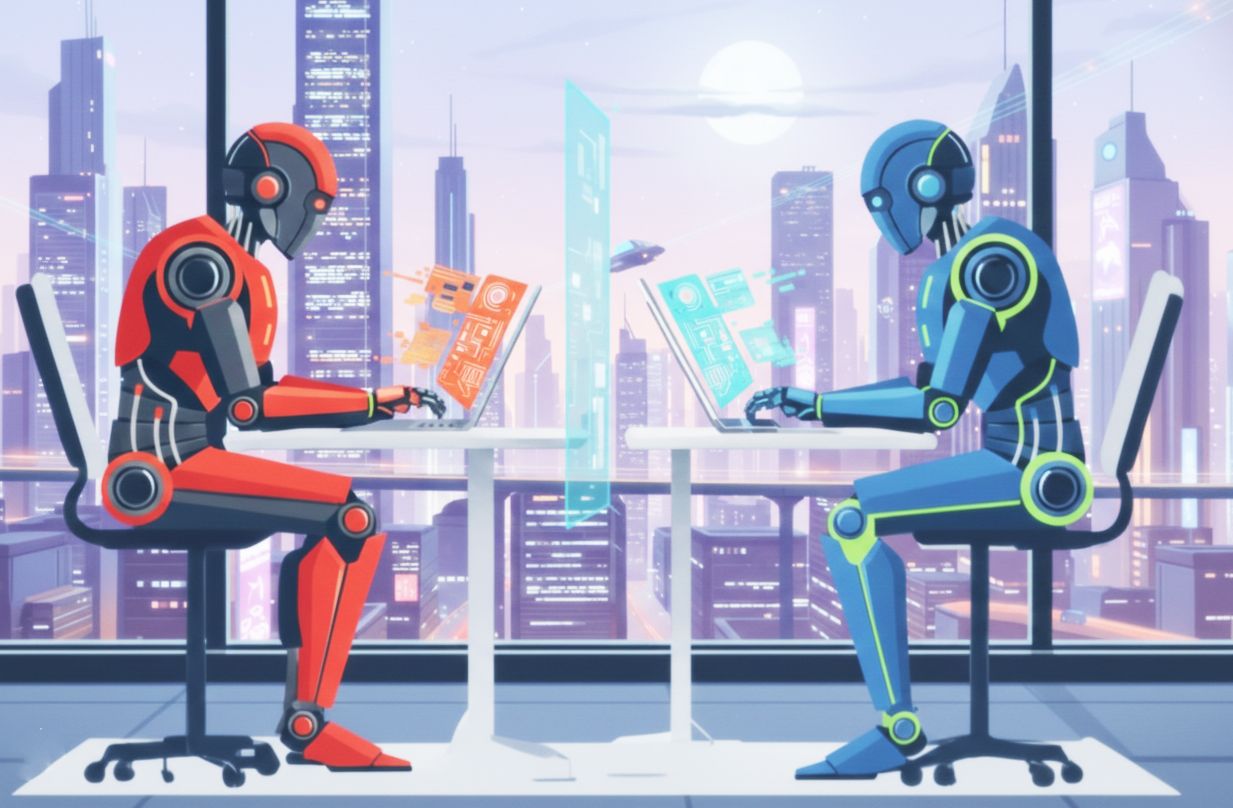

The world has not witnessed such a radical shift since the Industrial Revolution as it is seeing now with the advent of Generative Artificial Intelligence (AI). While it was once believed that AI would only manage heavy industrial machinery, current reality tells a different story. From creative arts to complex data analysis, AI is now omnipresent.
Shift in Skillsets: From ‘What I Know’ to ‘How I Use It’
The definition of skill and experience in the global job market is undergoing a fundamental transformation. Today, simply knowing programming, coding, Python, or being proficient in English is no longer enough. Tech giants like Google, Microsoft, and Amazon are prioritizing AI Prompting—the ability to use AI tools to execute tasks ten times faster.
The Rise of New Roles, the Departure of the Old
According to a recent report by Goldman Sachs, approximately 300 million full-time jobs worldwide could be impacted by AI. However, this does not necessarily mean mass unemployment; rather, it signifies a redistribution of roles.
- Jobs at Risk: Manpower is decreasing in sectors like customer support, data entry, and basic graphic design.
- New Opportunities: Roles such as ‘AI Ethics Specialist,’ ‘Machine Learning Engineer,’ and ‘AI Trainer’ are emerging—positions that were unimaginable even five years ago.
A Dream of the Four-Day Work Week?
In Europe, research is underway to leverage AI for boosting productivity. Many experts believe that if AI handles a significant portion of human labor, the concept of a 4-day work week could become a reality. This shift is expected to significantly improve the mental health and well-being of employees.
The New Risk of Inequality
The International Monetary Fund (IMF) has warned that AI could widen the gap between developed and developing nations. While advanced economies are rapidly integrating this technology to pull ahead, developing nations face the risk of falling behind due to infrastructural limitations.
Conclusion
The job market is currently at a critical crossroads. This is not merely about automation; it is a fusion of human intelligence with artificial intelligence. The future of the workforce belongs to those who can adapt most swiftly to this evolution.